
Still Good
Medium:
Mixed Media, Paint and Gems on Upcycled Fabric
Dimensions:
~16" x 12" x 10"
Artwork for Sale:
Sold
Year Completed:
2026
Description:
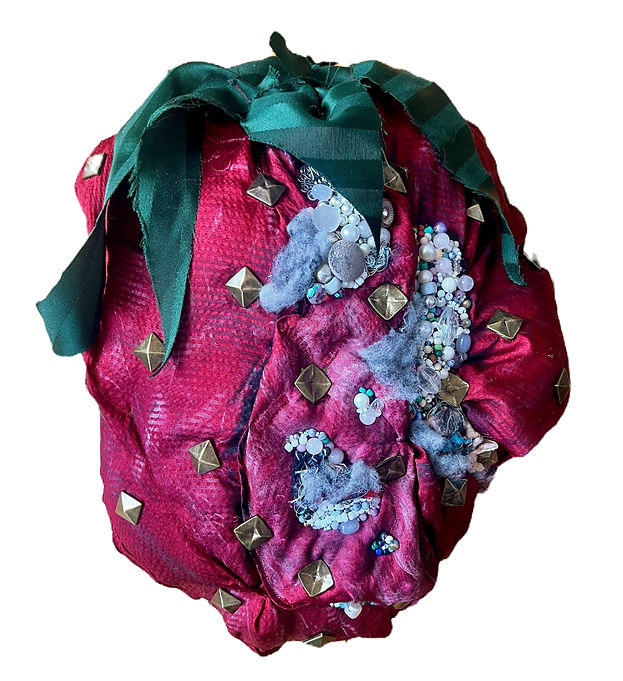
Still Good is a mixed media textile piece that pushes back against the idea that worth is tied to perfection. It’s a reminder that being “good” doesn’t mean being spotless. The strawberry--soft, oversized, slightly collapsing--carries marks of damage, exposure, and excess, but is still intact. It is still good.
The phrase “still good” is something we usually associate with food—something we say right before deciding whether to keep or throw something away. The work draws directly from America’s food system, where massive amounts of edible food are discarded simply because they don’t meet aesthetic standards. Grocery stores prioritize uniformity and visual perfection, and anything bruised, misshapen, or “off” gets pulled from the shelf and thrown out, regardless of its actual value or usability.
That same logic shows up in how people in our society are treated. There’s a quiet but persistent expectation to appear put-together, productive, and whole at all times. When someone falls outside of that—whether through trauma, hardship, mental health, poverty, or just not fitting the mold—they can start to feel broken, unworthy, or disposable. The piece connects these systems: the way we throw out food and the way we throw away people are not separate issues, but reflections of the same value structure. We at some point in our lives start to internalize that--perhaps even start to believe that the parts of us that have been hurt somehow define us completely.
The piece purposefully has two sides--one side of the strawberry representing the broken side that most times people often do not see until we reveal it, and the other side which is still a perfect picture of what a strawberry [person] should look like. The stuffed, degrading, and embellished fabric shows materials that feel both decorative and moldy--pushing against the polished exterior we're taught to maintain. It suggests that what is often hidden or seen as “too much” is actually part of what makes something/someone whole. The added studs mimic seeds, but also feel protective, almost defensive—like armor we build in order to protect our skin. The traumas we carry can make us feel like we’ve been ruined, like something in us has gone bad. But here, those “broken” parts are not removed or disguised—they’re integrated. They are not the whole story, but they are undeniably present.
Still Good ultimately asks what would happen if we stopped throwing things away—food, people, parts of ourselves—just because they don’t meet an ideal. It asks what would happen if we stopped equating value with appearance, wealth, or societal expectations--what might change if we stopped trying to look whole, and instead allowed ourselves to be good enough?


